
Адрес компании:Floor 3-2, Building A, No. 3 Yongyi 6th Road, Yongxing Industrial Zone, Henglan Town, Zhongshan, Guangdong, China Контактные лица:Shawn Контактная информация:1388xx888xx Почтовый ящик:1388xx888xx@gmail.com

В современном мире эффективное охлаждение является критически важным аспектом для множества областей, начиная от бытового комфорта и заканчивая промышленными процессами. Вентиляторы, как ключевые устройства в системах охлаждения, играют pivotal роль в обеспечении оптимальных температурных условий. Однако с разнообразием доступных опций на рынке возникает закономерный вопрос: какой именно вентилятор демонстрирует наивысшую эффективность в охлаждении? В данной статье мы проведем глубокий анализ, рассматривая различные типы вентиляторов, их характеристики, преимущества и ограничения, чтобы дать обоснованный ответ на этот вопрос. Мы также затронем такие аспекты, как энергоэффективность, инновационные технологии и практические рекомендации по выбору, что поможет читателям сделать informed решение для своих нужд.
Охлаждение – это процесс удаления тепла из системы или пространства, что необходимо для поддержания комфортных условий, предотвращения перегрева оборудования или обеспечения оптимальных параметров в промышленных установках. Эффективность охлаждения измеряется в способности устройства или системы быстро и с минимальными энергозатратами снижать температуру. В контексте вентиляторов, эффективность часто определяется такими параметрами, как расход воздуха (измеряемый в кубических метрах в час или CFM – cubic feet per minute), статическое давление, уровень шума и энергопотребление. Высокоэффективный вентилятор должен обеспечивать максимальный поток воздуха при минимальном потреблении энергии и шуме, адаптируясь к конкретным условиям эксплуатации.
Исторически, вентиляторы эволюционировали от простых механических устройств до сложных систем с электронным управлением. Ранние модели, такие как ceiling fans или настольные вентиляторы, были относительно просты, но современные технологии, включая DC motors, smart controls и материалы с улучшенной аэродинамикой, значительно повысили их эффективность. Кроме того, рост осознания экологических проблем и стоимости энергии подстегнул разработку более энергоэффективных решений, что делает тему выбора оптимального вентилятора как никогда актуальной.
В этой статье мы структурируем обсуждение вокруг нескольких ключевых категорий вентиляторов: бытовые вентиляторы (например, для жилых помещений), промышленные вентиляторы (для фабрик или серверных комнат), и специализированные системы, такие как those used in HVAC (Heating, Ventilation, and Air Conditioning). Для каждой категории мы оценим эффективность на основе объективных критериев и представим выводы о том, какой тип вентилятора лидирует в плане производительности охлаждения.
Чтобы понять, какой вентилятор наиболее эффективен, необходимо сначала ознакомиться с разнообразием доступных типов. Вентиляторы можно классифицировать по множеству параметров, включая назначение, конструкцию, принцип работы и применение. Ниже мы рассмотрим основные категории.
Осевые вентиляторы, также известные как propeller fans, являются одним из самых распространенных типов. Они работают по принципу создания воздушного потока вдоль оси вращения лопастей. Эти вентиляторы typically используются в ситуациях, где требуется большой объем воздуха при низком статическом давлении, например, в охлаждении электроники, вентиляции помещений или в автомобильных радиаторах. Их эффективность часто высока в terms of airflow rate, но они могут быть менее эффективны в системах с высоким сопротивлением, так как их производительность падает при увеличении back pressure.
К преимуществам осевых вентиляторов относятся простота конструкции, относительно низкая стоимость и высокая производительность при свободном airflow. Однако, их шумовой уровень может быть значительным, особенно на высоких скоростях, и они не идеальны для applications requiring high pressure. Современные innovations, такие как лопасти с optimized aerodynamics и материалы like plastics or alloys, улучшили их efficiency, но в целом, для максимальной эффективности охлаждения в сложных условиях, могут потребоваться другие типы.
Центробежные вентиляторы, или radial fans, работают by accelerating air radially outward from the center of rotation. Они способны создавать higher static pressure compared to axial fans, что делает их suitable for systems with ductwork or resistance, such as in HVAC systems, industrial processes, or dust collection. Эффективность центробежных вентиляторов often измеряется их ability to maintain airflow under pressure, and they are generally more energy-efficient in high-pressure applications.
Эти вентиляторы бывают разных конфигураций, включая forward-curved, backward-curved, и airfoil blades, каждая из которых offers trade-offs in efficiency, noise, and cost. Например, backward-curved blades typically provide higher efficiency and better performance under variable conditions, но могут быть дороже. В целом, центробежные вентиляторы excel в scenarios where cooling requires moving air through constraints, и они often considered among the most efficient for industrial cooling when properly sized and selected.
Бытовые вентиляторы designed for residential use include tower fans, pedestal fans, desk fans, and ceiling fans. Их основная цель – обеспечить personal comfort through air movement, rather than precise temperature control. Эффективность в этом контексте often focuses on factors like airflow coverage, energy consumption, noise level, and additional features such as oscillation or remote control.
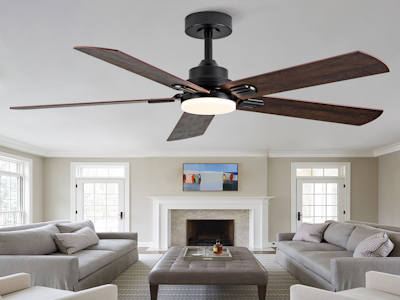
For instance, ceiling fans are highly efficient for whole-room cooling because они circulate air evenly and consume relatively little power (typically 10-100 watts). Однако, их effectiveness depends on room size and ceiling height. Tower fans, с другой стороны, offer focused airflow and are often equipped with HEPA filters or ionizers for improved air quality, но may not provide as much cooling power as larger units. В comparison, industrial fans might outperform in raw cooling, но для бытовых нужд, efficiency is also about usability and cost-effectiveness.
Промышленные вентиляторы are engineered for heavy-duty applications, such as cooling machinery, ventilating large spaces, or processes in manufacturing. Они typically larger, more powerful, and built to withstand harsh conditions. Types include axial flow fans for high-volume applications and centrifugal fans for high-pressure tasks. Эффективность здесь критична, так как energy costs can be substantial, and downtime due to overheating must be minimized.
These fans often incorporate advanced materials like stainless steel or composites, and may feature variable speed drives (VSDs) to optimize energy use based on demand. For example, in data centers, high-efficiency fans with EC (electronically commutated) motors can reduce energy consumption by up to 30% compared to traditional AC motors. Thus, for maximum cooling efficiency in industrial settings, fans with smart controls and high-efficiency motors are often the best choice.
Beyond standard fans, there are specialized cooling systems that integrate fans with other technologies. Examples include evaporative coolers, which use fans to blow air over water-soaked pads for adiabatic cooling, and refrigeration-based systems like air conditioners that employ fans to distribute cooled air. In these cases, the fan's efficiency is part of a larger system's performance.
For instance, in HVAC systems, the fan coil unit's efficiency depends on the fan's ability to move air through filters and coils with minimal energy loss. Recent advancements, such as brushless DC motors and aerodynamic designs, have significantly improved these systems' overall efficiency. Therefore, when considering maximum cooling effectiveness, it's essential to evaluate the fan within its contextual system rather than in isolation.
Эффективность вентилятора не определяется solely by its type; numerous factors interplay to determine how well it cools. Understanding these can help in selecting the optimal fan for a given application.
Расход воздуха (airflow rate) is a measure of the volume of air moved per unit time, typically in CFM or m³/h. Higher airflow generally means better cooling capacity, as more air is available to absorb and dissipate heat. Однако, this must be balanced against static pressure, which is the resistance the fan must overcome to move air. Fans with high static pressure capability are essential for systems with ducts, filters, or other obstructions.
The relationship between airflow and static pressure is often depicted in fan curves. A fan that maintains high airflow even as pressure increases is considered more efficient. For example, centrifugal fans typically have better performance curves for high-pressure applications than axial fans. Thus, for maximum efficiency, choose a fan whose curve matches the system's requirements.
Энергопотребление is a critical factor, especially with rising energy costs and environmental concerns. The efficiency of a fan is often expressed as airflow per watt of power consumed. Fans with higher efficiency ratios provide more cooling for less energy. Technologies like EC motors or variable frequency drives (VFDs) can optimize energy use by adjusting speed based on demand, reducing power consumption during low-load conditions.
For instance, in commercial buildings, fans with Energy Star ratings or similar certifications can save significant energy over time. Additionally, proper sizing is crucial; an oversized fan may consume excess power without providing additional benefit, while an undersized fan may struggle to cool effectively. Therefore, calculating the required airflow and pressure for the application is key to maximizing efficiency.
Шум can be an indirect factor in efficiency, particularly in residential or office settings where quiet operation is desired. Noisy fans may indicate inefficiencies in design, such as turbulence or vibration, which can also reduce lifespan. Modern fans often feature noise-reduction technologies, like balanced blades or acoustic enclosures, which can improve overall performance by minimizing energy losses due to sound generation.
In terms of cooling effectiveness, a quieter fan might be preferred for comfort, but it doesn't necessarily correlate with better cooling. However, in applications like server rooms, where fans run continuously, lower noise can reduce stress on equipment and improve working conditions, indirectly supporting efficiency.
The materials used in fan construction affect durability, weight, and aerodynamic performance. Lightweight materials like plastics or aluminum can reduce energy consumption by decreasing the load on the motor, while robust materials like steel ensure longevity in harsh environments. Aerodynamic designs, such as airfoil-shaped blades, minimize drag and improve airflow efficiency.
For example, fans with composite blades often achieve higher efficiency ratings than those with simple metal blades. Additionally, features like sealed bearings or corrosion-resistant coatings can maintain performance over time, ensuring consistent cooling efficiency.
Integration of smart technologies, such as IoT sensors or automated controls, can enhance fan efficiency by allowing real-time adjustments based on temperature, humidity, or occupancy. For instance, a smart fan in a home can reduce speed when no one is present, saving energy without compromising cooling when needed.
In industrial settings, predictive maintenance through sensors can prevent failures and maintain optimal performance. Thus, fans with advanced control systems tend to offer higher overall efficiency by adapting to changing conditions.
Based on the factors discussed, let's compare the different types of fans to determine which provides maximum cooling efficiency. It's important to note that "maximum efficiency" is context-dependent; what works best in one scenario may not in another.
In residential settings, ceiling fans often emerge as highly efficient due to their ability to circulate air throughout a room with low energy consumption (around 15-75 watts). They provide effective cooling through wind chill effect, and when used in conjunction with air conditioning, they can reduce AC load by up to 40%, according to studies. Tower fans or pedestal fans offer portability and focused cooling but may consume more power for equivalent airflow.
However, for pure cooling effectiveness in terms of temperature reduction, evaporative coolers (which include fans) can be more efficient in dry climates, as они use the principle of evaporation to cool air significantly. But in humid conditions, their efficiency drops. Overall, for general home use, a well-designed ceiling fan or a smart tower fan with energy-efficient motors provides excellent efficiency.
In industrial environments, centrifugal fans with backward-curved blades and EC motors are often the most efficient. Они can handle high static pressures while maintaining good airflow, and their energy efficiency ratios are superior. For example, in HVAC systems, these fans can achieve efficiencies of over 80%, compared to 50-60% for standard axial fans.
Additionally, in applications like data center cooling, specialized fans with variable speed controls can dynamically adjust to heat loads, minimizing energy waste. Thus, for maximum cooling efficiency in industrial contexts, high-performance centrifugal fans integrated with smart controls are typically the best choice.
In systems where cooling is part of a larger mechanism, such as in refrigeration or air conditioning, the fan's efficiency is secondary to the overall system's Coefficient of Performance (COP). However, fans with high airflow and low power consumption, like those with DC motors, can enhance the system's efficiency. For instance, in modern split AC units, inverter-driven fans contribute to overall energy savings.
Therefore, the most efficient fan in these cases is one that is optimally matched to the system's requirements, often involving custom engineering for specific applications.
After thorough analysis, it appears that there is no single "best" fan for all situations. However, for maximum cooling efficiency:
Thus, the fan that ensures maximum cooling efficiency is one that is properly selected based on the specific application, considering factors like airflow needs, pressure requirements, energy consumption, and environmental conditions.
The quest for higher efficiency drives continuous innovation in fan technology. Emerging trends include the use of additive manufacturing for optimized blade designs, integration with renewable energy sources, and advancements in materials science for lighter and stronger components.
For example, fans with biomimetic designs, inspired by nature (e.g., owl wings for silent operation), are gaining traction. Additionally, the adoption of AI for predictive maintenance and optimization can further enhance efficiency by preventing downtime and ensuring peak performance.
Looking ahead, we can expect fans to become even more efficient, with lower energy footprints and smarter functionalities, ultimately contributing to sustainable cooling solutions globally.
To choose the most efficient fan for your needs, follow these steps:
By taking a measured approach, you can select a fan that delivers maximum cooling efficiency while minimizing costs and environmental impact.
В заключение, вопрос о том, какой вентилятор обеспечивает максимальную эффективность охлаждения, не имеет универсального ответа, но зависит от конкретных условий и требований. Осевые вентиляторы excel в scenarios с низким давлением, центробежные – в high-pressure environments, а бытовые options like ceiling fans offer great efficiency for comfort cooling. Ключевые факторы, такие как энергопотребление, управление и конструкция, играют crucial роль в определении overall effectiveness.
С современными технологиями, такими как EC motors и smart controls, fans are becoming increasingly efficient, paving the way for sustainable cooling solutions. При выборе вентилятора, всегда учитывайте context и strive for a balance between performance, energy use, and cost. Ultimately, the most efficient fan is the one that best meets your unique needs, whether for home, industry, or beyond.
We hope this article has provided valuable insights and guidance. For further information, consider consulting technical specifications or professional reviews to make an informed decision. Remember, effective cooling not only enhances comfort but also contributes to energy conservation and environmental sustainability.
【Предыдущая статья】 Фермерский стиль вентилятора как выбрать идеальный
【Следующий пост】 Забудьте о кондиционерах: гастрономическая революция с потолочными вентиляторами
Адрес компании:Floor 3-2, Building A, No. 3 Yongyi 6th Road, Yongxing Industrial Zone, Henglan Town, Zhongshan, Guangdong, China Контактные лица:Shawn Контактная информация:1388xx888xx Почтовый ящик:1388xx888xx@gmail.com